Car dips when braking? This is a widespread but serious problem that many drivers are exposed to, and is often referred to as nose-diving or over-rolling. It is the expectation of your vehicle to be in a steady-held pose when you apply the brakes. Nevertheless, when the front part of your car jerks downward, or your car is heavily tilted to one side, then it is quite obvious that the balance of your car is broken.
These symptoms are not to be ignored for the reason that they are only making your ride uncomfortable; they also greatly affect your safety, expand the stopping distances, and they also cause unnecessary pressure to other parts of the vehicle. When you start to notice these signs, it is time to visit professional mechanics in Perth so that your car will not be off the road anymore.
Understanding The Physics of Weight Transfer
You should know why your car dips when braking. First, it is necessary to know the concept of weight transfer. There is a centre of gravity in every vehicle. During acceleration, the weight moves towards the back. When braking occurs, the kinetic energy causes a redistribution of the force of the vehicle to the front.
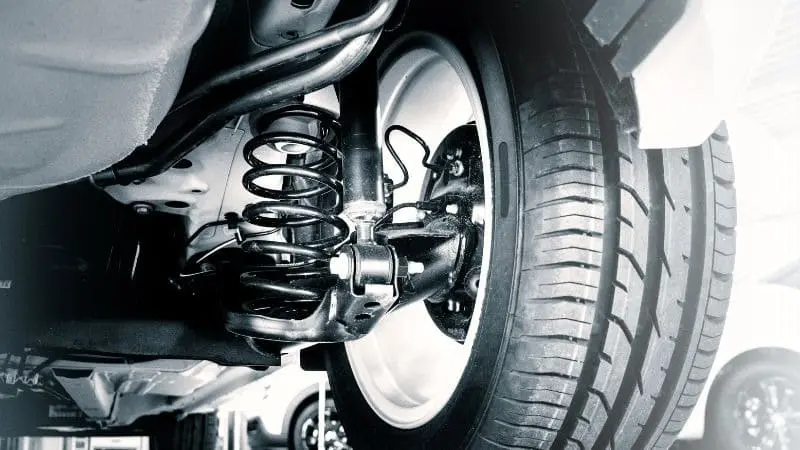
This weight transfer is supposed to be controlled by a healthy suspension system. The car is supported by components such as shock absorbers, struts, and springs, which are the muscles that maintain the car straight. Once such components have broken down, they lose the resistance to the weight shift force, and the unpleasant dipping feeling ensues. This, in the car business, is commonly known as “nose-diving.”
Worn Shock Absorbers and Struts: The Primary Culprits
Badly worn shock absorbers or struts are the most common cause of a car taking a nosedive during braking. These parts are hydraulic mechanisms that regulate the rebound and impact of the movement of your vehicle’s springs and suspension.
How They Fail
A piston that travels through hydraulic fluid is located inside a shock absorber. Resistance is generated by this movement, and thus it makes the springs bounce less. The seals contained in the shocks may leak over time, or the fluid may become degraded. After the force of damping is lost, the springs are allowed to sustain the weight by themselves. As springs are made to compress and expand, they will not stop the front part of the car from plunging forward uncontrollably when the brakes are pressed.
Signs of Worn Shocks
Aside from the dip, you might notice:
1. The car continues to bounce after hitting a bump. 2. Uneven tyre wear (cupping). 3. Fluid leaking from the exterior of the shock or strut body. 4. A “harsh” ride where you feel every pebble on the road.
If you suspect your shocks are gone, visiting an auto suspension shop is the best course of action to prevent further damage to your tyres and braking system.
Issues Within The Braking System
While suspension is usually the main suspect, the braking system itself can contribute to instability. According to experts in car mechanics in Perth, uneven brake force can cause the vehicle to pull or dip inconsistently.
1. Stuck Brake Callipers:
If a calliper on one side is sticking or seized, the braking force won’t be distributed evenly. This can cause the car to “lurch” or dip more aggressively on one side than the other.
2. Worn Brake Pads:
While worn pads usually cause squealing, if the pads are worn unevenly, it can affect the balance of the stop.
3. Brake Hose Issues:
A collapsed internal liner in a brake hose can act as a one-way valve, keeping pressure on the calliper even after you release the brake, or preventing pressure from reaching it effectively. This imbalance often manifests as a pull or a dip during deceleration.
Suspension Bushings and Control Arms
The suspension of your car is a complicated system of metal arms and rubber bushings. These bushings serve as cushions in the joints of the suspension and minimise friction and absorb the vibration in the road.
In situations where these rubber parts wear out and die off (mostly due to age or because of the heat), excess play in the suspension is enabled. This implies that the metal components are able to travel more than they are expected to.
The effect of the control arms may be displacing forward or backward, more so than you wanted, adding to the sense that the car dips when braking. A major car service often has a comprehensive check on these rubber parts to ensure that the geometry of your car is not tampered with.
Why Your Car Leans or Dips When Turning
While braking causes a forward dip, turning causes a lateral (sideways) dip, known as body roll. If your car feels like a boat tossing on the waves when you take a corner, the following issues are likely at play:
1. Anti-Roll Bars (Sway Bars): The anti-roll bar is designed to connect opposite wheels and reduce the lean during a turn. If the sway bar links are broken or the bushings are worn, the car will lean excessively toward the outside of the turn.
2. Spring Fatigue: Over many years, the metal coils of your springs can “sag.” A sagging spring on one side of the vehicle will cause an immediate lean when navigating corners.
3. Damaged Struts: Just as they cause nose-diving, worn struts fail to stabilize the car’s body during the lateral weight shift of a turn.
The Role Of Wheel Alignment and Tyre Pressure
Sometimes problems are caused by the simplest things. When your tyres are not inflated fully, then the sidewalls get mushy. This structural integrity absence implies that as the weight of a turn or a hard stop takes place, the tyre will compress more, resulting in a dipping feeling.
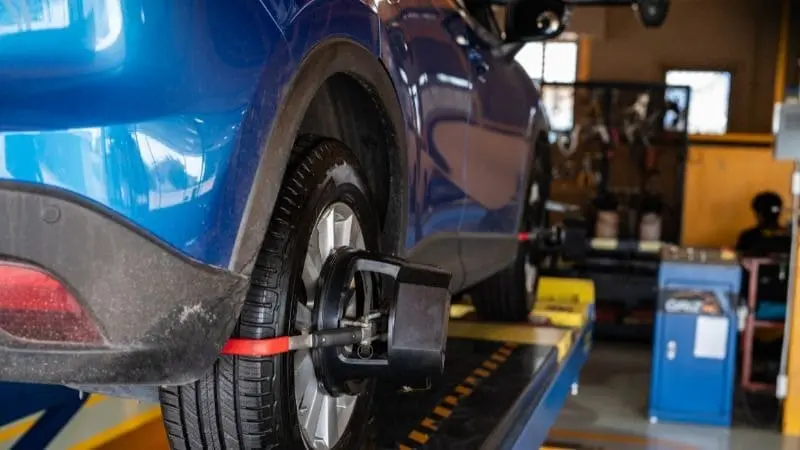
On the same note, when there is poor alignment of wheels, this may lead to the car feeling unstable. With the wrong camber or caster of your wheels, the load of the vehicle would not be equally distributed on the contact patch of the tyre. This may cause the steering to become light and the body to feel like it is drifting or dipping when carrying out the manoeuvres. Locating the best mechanics Perth can help check that your alignment is verified through the use of precision laser equipment in your routine maintenance.
How a Professional Car Mechanic Can Help
Addressing a car that dips requires a systematic approach. A reputable car workshop Perth will typically perform a “bounce test” and a visual inspection on a lift. They will check for:
1. Hydraulic fluid leaks on struts. 2. Cracks in rubber bushings. 3. The condition of the sway bar links. 4. Brake pad thickness and calliper operation.
Whether it is a simple car suspension repair or a more comprehensive car service Perth residents should rely on catching these issues early, which can save you thousands in the long run.
Conclusion
Comfort is not the only reason why it is crucial to keep the ride level and stable, but the basis of vehicle safety. Depending on battering shocks to deteriorated bushings, different circumstances can make your car lose its cool. To avoid the total failure of certain components, do not wait until your car is sinking as you press the brake pedal. These problems can be solved with the help of a major car service or even a trip to a specialised auto suspension shop, and provide your vehicle with a sense of control and calmness.
To obtain skilled diagnostics and high-quality repairs, Car Mechanic Perth is sure to restore your car to its optimal condition.
1. What does it mean when my car dips while braking?
Answer 1:
It normally indicates that your suspension system, be it shock absorbers or struts, has lost its ability to manage the weight distribution forward of the vehicle. This will result in a nosedive of the front end on the pavement.
2. Why does my car lean or dip when turning corners?
Answer 2:
This is normally due to damaged links of sway bars, broken bushings, or weakening springs. It also means that the suspension is not very effective at dealing with the lateral (sideways) forces of the turn.
3. How do bad shock absorbers affect braking and turning?
Answer 3:
Shock absorbers control the pace of the transfer of weight. In their absence, the load changes rapidly and excessively, causing a lack of stability, increased stopping distances, and loss of control during the turns.
4. Can low tyre pressure cause dipping or leaning?
Answer 4:
Yes. When the tyre pressure is too low, the sidewalls of the tyres are not strong enough to hold the weight of the vehicle in case shifting weight occurs and results in a slow, tilted feel.
5. Can wheel alignment issues cause dipping?
Answer 5:
Although alignment has a greater impact on steering and tyre wear, what happens when a vehicle is not aligned correctly is that it may feel unstable and add to a clinging or pulling feel as you step on the brakes.
6. Why does my car feel unstable at low speeds or in traffic?
Answer 6:
The instability usually indicates deteriorated suspension bushings or steering parts. Stop-and-go traffic. The weight movement with each move of the vehicle is what makes it evident in the frame and suspension that there is some form of play or looseness that is not always desired.